

 text or whatsapp us
  orders@chainsawbars.co.uk
 sign me up
 basket
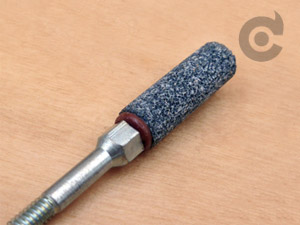
 ![01005007 Tecomec Grinding Wheel 4.7mm[3/16"]](https://magical-dubinsky.217-160-146-239.plesk.page/content/uploads/1005007.jpg)
We have an essential info section looking at how to ID chains – why not take a look by clicking here.
Chains are not measured by stretching them out on a bench and squinting down a tape measure – chains are identified by PITCH, GUAGE and NUMBER OF DRIVE LINKS [no – not the cutting teeth – drive links and you’ll know the difference by even a cursory look at the chain ID link above].
Bars likewise are not measured the same way – manufacturers give them a set ‘length’ which is generally the sticky out bit that comes out of the chainsaw [not including the mount unless in the case of large double ended milling bars which are the exception to the rule and measured end to end].
If that all seems too much like hard work then bear in mind that chainsaws require a lot more attention and care than other power tools. Regard your chainsaw as ‘Excalibur’ with the cutting edge as your chain [please don’t refer to is as a ‘blade’ – it’s a chain. When you look to change it ask for a new ‘chain’ – not a new ‘blade’]. Identifying and being able to use the correct terms will set you apart from others.
Chain sharpening is key – if you cannot use a chain and have it cutting well until the cutters are so small they end up getting knocked off – you have plenty to learn. Watch, research, rinse and repeat. Read our article on chain sharpening by clicking here – often people get caught up in different angles and techniques – but the principles are always the same.
If you are serious about correct maintenance of your bar and chain work your way through the Oregon manual [click here] and after that check out the Stihl equivalent [click here]. Using a chainsaw for 20 years [badly] does not qualify you as an experienced user – so be the change, make the difference and keep educating yourself about these valuable yet dangerous tools.
And finally – why buy a new bar and chain without checking/replacing the drive rim or drive sprocket? [again click here if unsure on what these refer to]. Much as we would enjoy selling you the next bar and chain much earlier than you needed it [a worn sprocket will wear your new chain which will wear your new bar a lot lot faster] – we would rather you got the most out of your purchase.
We have an essential info section looking at how to ID chains - why not take a look by clicking here. Chains are not measured by stretching them out on a bench and squinting down a tape measure - chains are identified by PITCH, GUAGE and NUMBER OF DRIVE LINKS [no - not the cutting teeth - drive links and you'll know the difference by even a cursory look at the chain ID link above]. Bars likewise are not measured the same way - manufacturers give them a set 'length' which is generally the sticky out bit that comes out of the chainsaw [not including the mount unless in the case of large double ended milling bars which are the exception to the rule and measured end to end]. If that all seems too much like hard work then bear in mind that chainsaws require a lot more attention and care than other power tools. Regard your chainsaw as 'Excalibur' with the cutting edge as your chain [please don't refer to is as a 'blade' - it's a chain. When you look to change it ask for a new 'chain' - not a new 'blade']. Identifying and being able to use the correct terms will set you apart from others. Chain sharpening is key - if you cannot use a chain and have it cutting well until the cutters are so small they end up getting knocked off - you have plenty to learn. Watch, research, rinse and repeat. Read our article on chain sharpening by clicking here - often people get caught up in different angles and techniques - but the principles are always the same. If you are serious about correct maintenance of your bar and chain work your way through the Oregon manual [click here] and after that check out the Stihl equivalent [click here]. Using a chainsaw for 20 years [badly] does not qualify you as an experienced user - so be the change, make the difference and keep educating yourself about these valuable yet dangerous tools. And finally - why buy a new bar and chain without checking/replacing the drive rim or drive sprocket? [again click here if unsure on what these refer to]. Much as we would enjoy selling you the next bar and chain much earlier than you needed it [a worn sprocket will wear your new chain which will wear your new bar a lot lot faster] - we would rather you got the most out of your purchase.
Related products
-
3x Stones Pack Granberg Grinding stones 9.5mm[3/8″] – Grinds Depth Gauges
Part Number G424-3$23.03Stock 7Add to -
3x Stones Pack Granberg filing stones 6.35mm[1/4″] – Grinds Depth Gauges
Part Number G420-3$15.02Stock 109Add to -
![4.0mm[5/32"]Diamond Fine - Sharpens 3/8 Lo Pro and 1/4 Chains [Old Style]](https://magical-dubinsky.217-160-146-239.plesk.page/content/uploads/4.0mm532Diamond-Fine-Sharpens-38-Lo-Pro-and-14-Chains-New-Style-350x263.jpg)
4.0mm[5/32″]Diamond Fine – Sharpens 3/8 Lo Pro and 1/4 Chains [Old Style]
Part Number DS G532CHPF-ES$32.04 Out of Stock -
![A4.0 4.0mm[5/32"] Carbide Sharpening Burr - Sharpens 3/8 Lo Pro and 1/4 .050[1.3mm]](https://magical-dubinsky.217-160-146-239.plesk.page/content/uploads/4.0mm532-Carbide-Sharpening-Burr-Sharpens-38-Lo-Pro-and-14-350x263.jpg)
A4.0 4.0mm[5/32″] Carbide Sharpening Burr – Sharpens 3/8 Lo Pro and 1/4 .050[1.3mm]
Part Number A4.0$17.02Stock 88Add to